The quiet details where a stone wall finally meets the ground
Stone thresholds, gravel and the joints most people never notice.
Author
Oliver Grant
Reading time
4 min read
Category
Details
Published

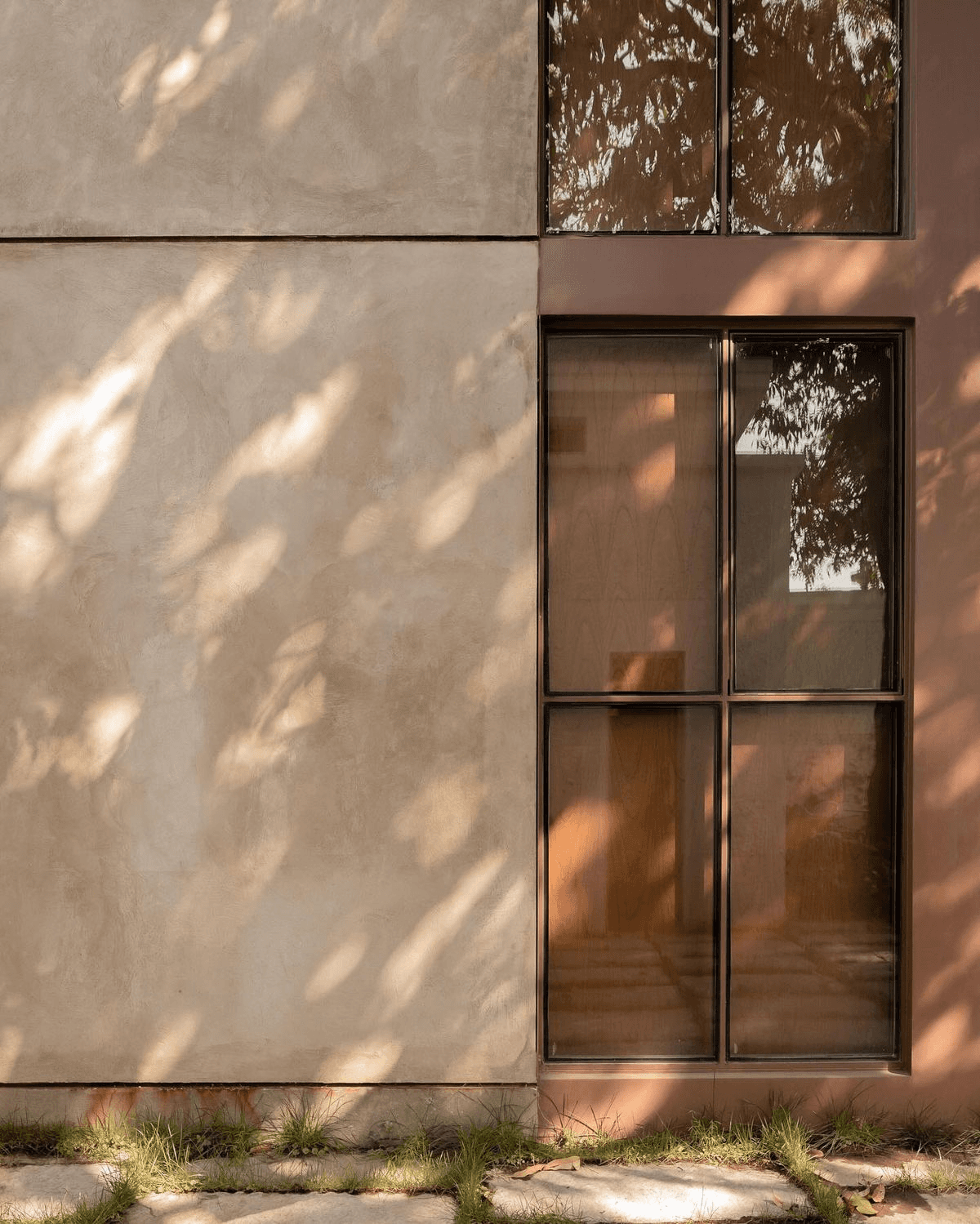
Most people never look at the bottom of a wall. We look at little else on site, because that is where a building either settles into its ground or sits on top of it like furniture.
A good base detail is almost invisible. A poor one shows up within a year, as a dark line of damp, a crack in the render or a strip of gravel that keeps washing onto the path.
Three details we draw every time
First, a stone plinth that steps out a couple of inches from the wall above. It throws rain away from the face and gives the eye a clear line where the building begins.
Second, a gravel margin about a foot wide, laid over a membrane and edged in steel. It drains, it keeps planting from rotting the wall and it makes a pleasant sound when someone walks past.
Third, thresholds cut from a single piece of stone, sloped by a fraction of an inch. Doors close better, water stays out and the step from inside to outside feels solid under every foot.
Why it matters to clients
None of this appears in a render, and none of it is expensive. It is simply time spent on site with the mason, deciding exactly where each piece goes.
A wall that meets the ground well looks as if it has always been there.
Clients rarely mention these details. They mention that the house feels finished, and that nothing needed fixing after the first winter. That is the same thing said another way.
Words by
Oliver Grant
Journal
Keep reading
More notes on materials, light and the way we work.


