How a single olive tree brings calm to a tall stone hall
A tall room, one olive tree and the sun moving across limestone.
Author
Eleanor Hart
Reading time
6 min read
Category
Light
Published

Fifty feet of limestone and one olive tree. That was the whole brief for the entrance hall, and it took us longer to get right than any other room in the house.
The family wanted a place to arrive, not a corridor. They wanted to take their shoes off, put the shopping down and feel the temperature drop by a few degrees before they walked any further in. A tall room can do that, but only if it gives the eye something to rest on.
One tree, one roof light
We tried sculpture, a long bench, a wall of books. Each of them filled the room and none of them calmed it. The tree was the client's idea, and it was the right one. It moves a little when the door opens, it changes with the seasons and it asks nothing of anyone.
It sits under a single roof light, cut to the size of its crown. Through the morning the shadow of its leaves travels across the floor, climbs the east wall and fades out by early afternoon. Nobody planned the exact path. We only made sure there was nothing in its way.
Letting the stone be quiet
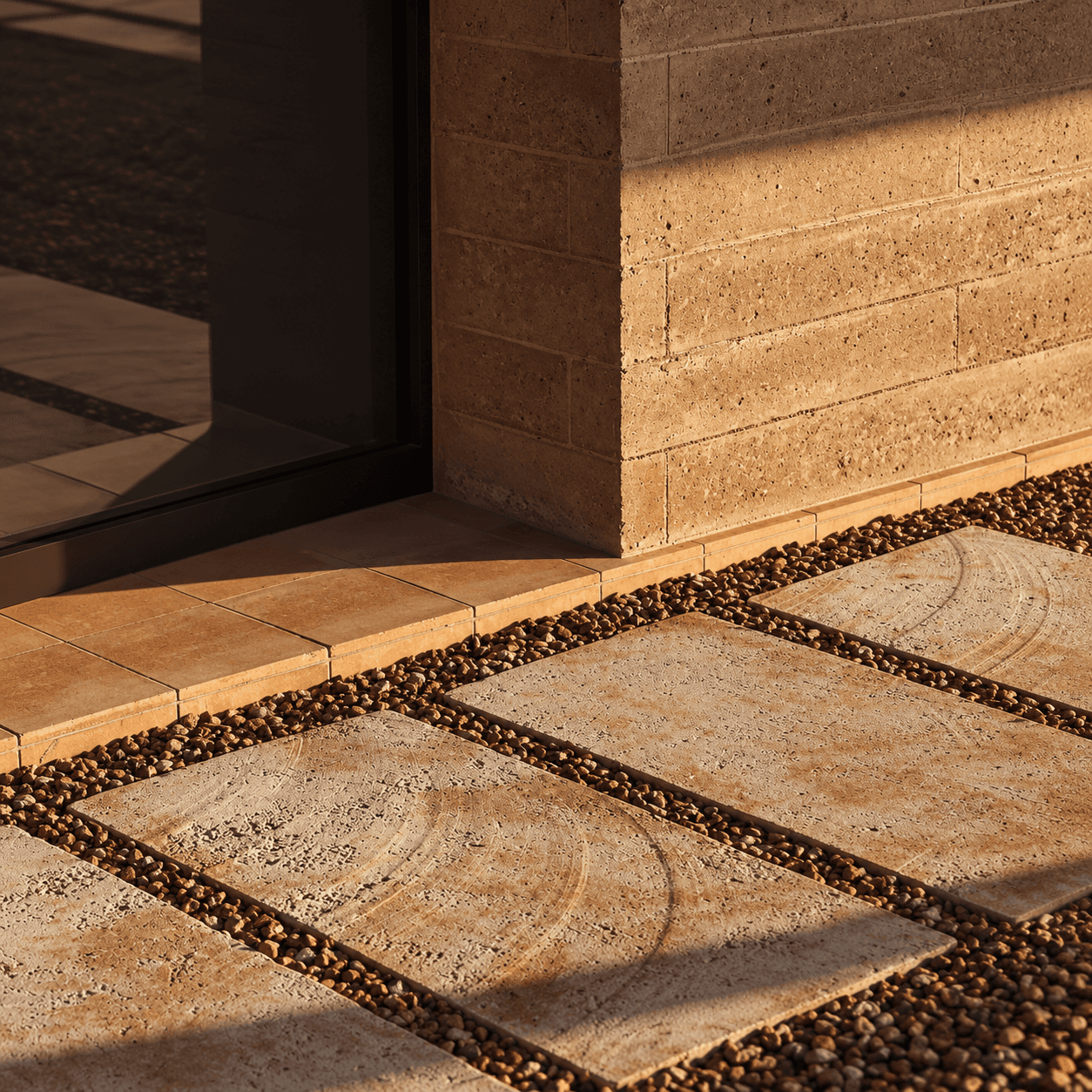
The walls are a local limestone, honed rather than polished, so they hold light without throwing it back. We kept the joints thin and the courses long, and we stopped every material change at the same height around the room. The result is a space that reads as one surface, which is exactly what lets the tree stand out.
A tall room does not need more things in it. It needs one thing that is allowed to change.
The floor continues outside without a step, so on a summer evening the hall becomes part of the garden. The door stays open, the stone stays cool and the tree throws one last long shadow towards the stairs.
When we went back a year later, the family had added nothing to the room. That is the best review a hallway can get.
Words by
Eleanor Hart
Journal
Keep reading
More notes on materials, light and the way we work.


