Curved walls that slow you down on the way through a house
How a soft corner turns a corridor into a place to pause.
Author
Amelia Shaw
Reading time
4 min read
Category
Architecture
Published

A straight corridor tells you to keep walking. A curved one asks you to slow down and see what comes next.
In this house we softened every corner on the main route, from the front door to the garden. None of the curves is dramatic. Each one turns just enough to hide the next room until you are almost inside it.
How a corner changes a route
Sharp corners make people cut across a space. Soft ones make them follow it. We found that a radius of around two feet was enough to change how the family moved through the house, without taking useful space from the rooms on either side.
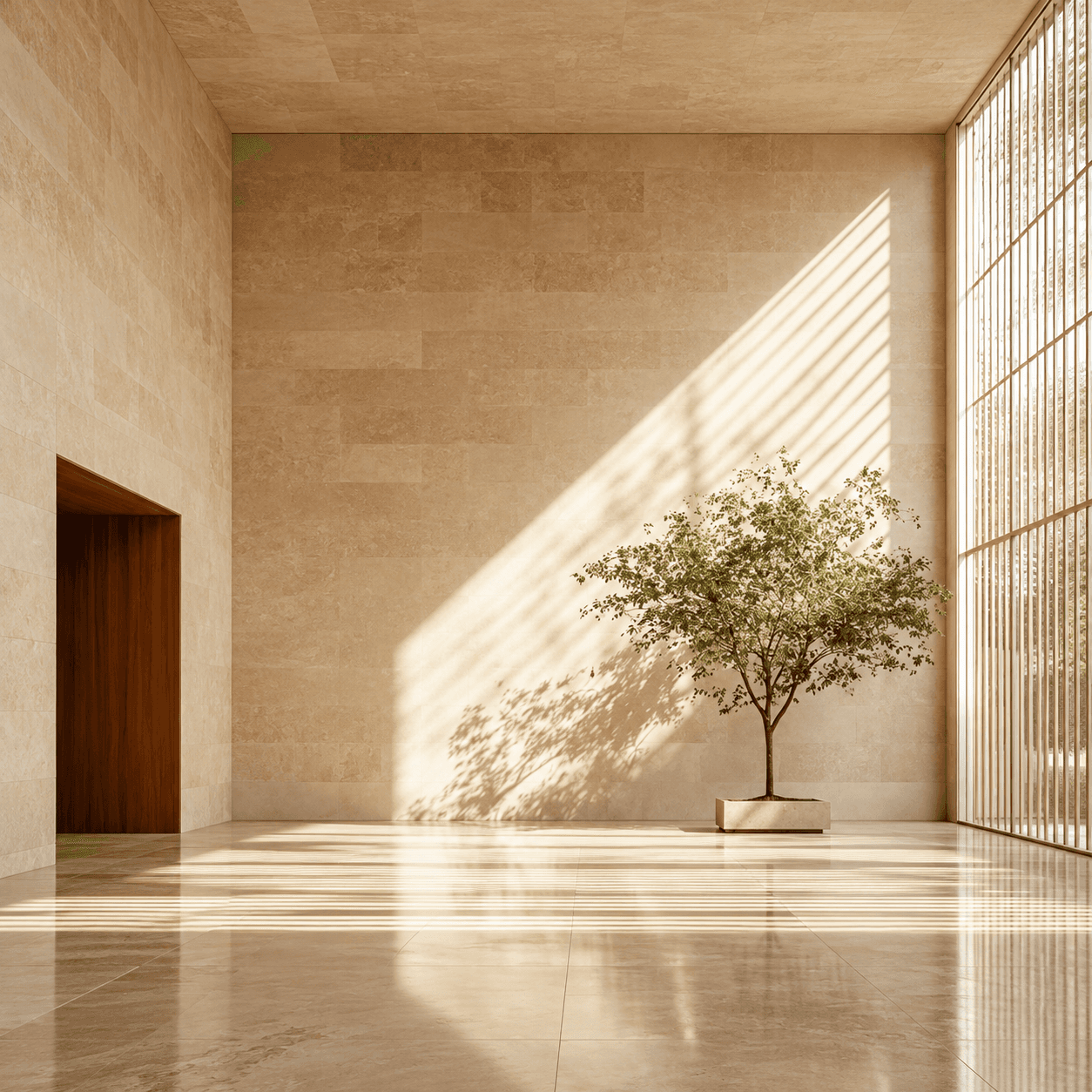
The curved walls are built in brick and finished in lime plaster, so light rolls around them rather than stopping at an edge. Late in the day the corridor glows a little, even when no lamps are on.
Small places to pause
Where a curve meets a window we added a deep sill at seat height. One looks onto the garden, one onto the street, one onto a single tree in a light well. They have become the most used seats in the house.
We were not designing a corridor. We were designing the time it takes to walk down one.
Curves cost a little more to build, mostly in the time it takes a good bricklayer to set them out. Our clients have never once asked us whether it was worth it.
Words by
Amelia Shaw
Journal
Keep reading
More notes on materials, light and the way we work.


